
ABOUT US
Sed ut perspiciatis unde omnis iste natus error sit voluptatem
accusantium doloremque laudantium, totam rem aperiam,
GET A FREE QUOTE

MCC Hydraulic Press: C919 “Forger”
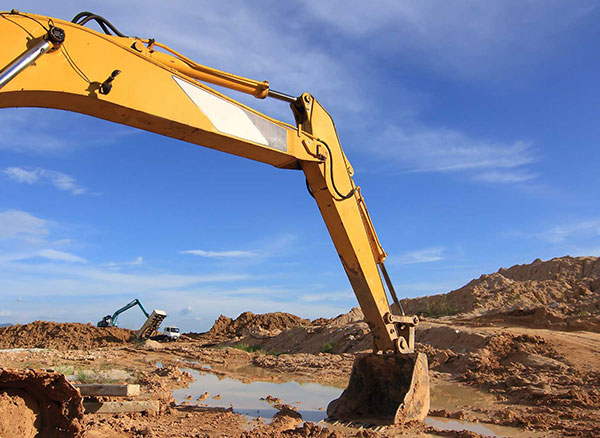
MCC Heavy Industry’s 400 MN hydraulic die-forging press, the world’s largest single-cylinder winding precision forging press, is the forger of key components for the China-made C919 large aircraft, providing core support for the production of the C919’s landing gear and large fuselage structures. While traditional multi-cylinder hydraulic presses are limited in forging precision and fuselage rigidity, this hydraulic press utilizes a “single-cylinder + prestressed steel wire winding” structure, increasing fuselage rigidity by 30%. With forging precision controlled to 0.1 mm, it can process large forgings with a maximum diameter of 3.5 meters and a weight of 50 tons. The C919 landing gear forging production process begins with heating the aviation-grade high-strength alloy billet to 1200°C. The hydraulic press then repeatedly forges at a pressure of 400 MN (equivalent to the weight of a 40,000-ton weight), refining the metal’s internal grain size and significantly improving its strength and toughness. After forging, the “intelligent controlled cooling system” slowly cools the forging at a rate of 5°C/minute to prevent cracks caused by large temperature differences. Previously, large aviation forgings in my country had to be imported from abroad, resulting in high costs and lead times of up to six months. The commissioning of this hydraulic press has shortened production cycles to two months, reducing costs by 40%. This has completely ended my country’s dependence on imports for large aerospace forgings and laid a solid foundation for the mass production of large aircraft in China.
Chufeng High-altitude Platform: A “climbing tool” in muddy areas
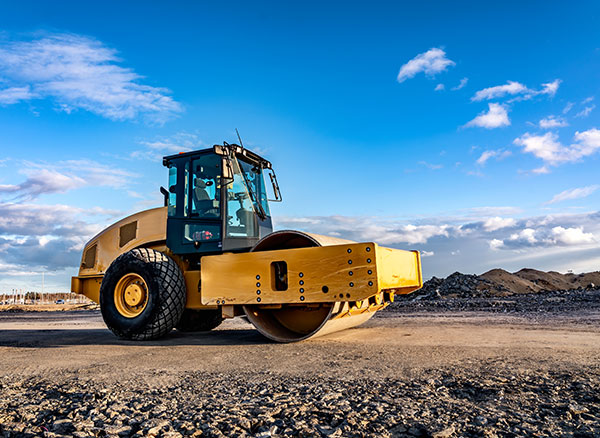
Shandong Chufeng Heavy Industry’s crawler aerial work platforms are a powerful tool for complex applications such as construction and municipal maintenance, particularly excelling on uneven surfaces and muddy environments. Their core competitiveness stems from their “crawler chassis + intelligent leveling” design. The tracks are made of high-strength rubber with a deep tooth pattern, providing a contact patch three times larger than a wheeled chassis. This improves grip on muddy surfaces by 60%, allows for a climbing grade of up to 40%, and enables stable operation even on a 35° slope. The “one-touch leveling” feature utilizes four sets of hydraulic outriggers linked to tilt sensors. When the equipment is parked on sloping ground, the sensors detect the tilt angle in real time, and the outriggers automatically extend and retract within 5 seconds, keeping the platform level within 0.5°, ensuring operator safety. Furthermore, the equipment is equipped with Huawei’s “Aftermarket Application Management Platform,” which monitors the location, operating hours, fault codes, and other data of tens of thousands of devices in use in real time. When equipment malfunctions, back-end engineers can remotely diagnose and guide on-site personnel to perform repairs, reducing troubleshooting time from 24 hours to 4 hours. In 2024, the export value of this equipment exceeded RMB 200 million, and it was widely used in infrastructure projects in Southeast Asia, the Middle East and other regions.
Northern Shaft Shield Machine: The “Underground Pioneer” of Energy Storage Power Stations
The borehole-expanding shaft tunnel boring machine (TBM) developed by Northern Heavy Industries for a pumped-storage power station in Zhejiang Province is an underground pioneer in shaft construction for power stations, revolutionizing the inefficient and high-risk nature of traditional blasting methods. Traditional shaft construction is extremely challenging due to the confined space and complex geology. However, this TBM’s innovative “conical cutterhead + borehole-expanding and slag removal” design is a key feature. The cutterhead is conical, with a diameter gradually expanding from 3 meters at the top to 6 meters at the bottom. During construction, the top cutterhead first excavates a pilot hole, and then the bottom cutterhead expands the hole, resolving the problem of traditional TBMs’ limited rotation in the shaft. The slag removal system utilizes a combination of a screw conveyor and negative pressure suction to rapidly transport slag to the surface, increasing slag removal efficiency by 50% and preventing slag accumulation from blocking the construction corridor. During the manufacturing process, the equipment applied 3D intelligent modeling technology to simulate the assembly precision of the cutterhead and fuselage in advance, with an error control of 0.1 mm. Laser cutting and robotic welding processes were used to increase the strength of key welds by 20%, ensuring that the equipment would not leak when subjected to high pressure in a vertical shaft 200 meters underground. Since its commissioning, this equipment has increased shaft construction efficiency by three times compared to traditional blasting methods, achieving “zero accident” operations. This provides new equipment support for the rapid construction of pumped-storage power stations in my country and opens up new directions for the cross-scenario application of shield machine technology.
MCC Multi-directional Die Forging Line: A “Smart Factory” for Forgings
MCC Heavy Industry has built three multi-directional die forging production lines, creating a “smart factory” for producing complex forgings for high-end equipment. Through “intelligent linkage + precision control,” they have overcome the challenges of producing complex forgings. For example, the 40-meganewton multi-directional die forging line features a fully automated production process. A robotic arm precisely feeds metal billets heated to 1100°C into the die. Three sets of punches then apply pressure simultaneously from different directions, forcing the metal to flow along the die cavity, forming the complex forgings in a single step. This eliminates the multiple forging presses and subsequent processing required by traditional forging. The line’s intelligent monitoring system monitors forging parameters such as pressure, temperature, and time in real time, automatically adjusting any deviations from set values to ensure dimensional accuracy within 0.2 mm. The system also records production data for each forging, enabling full traceability and facilitating subsequent quality inspections. Compared to conventional forgings, the forgings produced by this production line are flash-free and resemble finished parts, reducing subsequent processing time by 60%. They also feature finer metal grains, triple fatigue life, and over 20% improved mechanical properties. Currently, the production line supplies key forgings for wind turbine spindles and nuclear power pressure vessels for wind power, nuclear power, and aviation, driving the intelligent and domestically produced manufacturing of high-end forgings in my country.